
Dentures in Greenwich, CT
Missing teeth can make it harder to eat, speak, and smile comfortably. Dentures provide a removable solution for replacing several or all missing teeth while restoring function and supporting the natural appearance of your smile.
Dentures are customized for a comfortable fit and designed around your individual oral health, appearance, and lifestyle.

What are dentures?
Dentures are removable dental appliances used to replace missing teeth. They consist of natural-looking artificial teeth supported by a base that rests comfortably over the gums.
Depending on how many teeth are missing, dentures can replace several teeth or an entire upper or lower arch.
Because dentures are removable, you can take them out for cleaning and routine care of the gums and any remaining natural teeth.
When Are Dentures Recommended?
Dentures may be an option when multiple teeth are missing or when remaining teeth cannot be predictably preserved.
Replacing missing teeth can help:
- Restore comfortable chewing
- Improve speech
- Complete the appearance of your smile
- Support facial contours
- Help maintain the position of remaining teeth
- Improve confidence when eating, speaking, and smiling
The appropriate type of denture depends largely on how many healthy natural teeth remain and the condition of the surrounding gums and supporting bone.
Types of Dentures
Full Dentures
Full, or complete, dentures replace all of the teeth in the upper jaw, lower jaw, or both.
A conventional full denture is generally placed after remaining teeth have been removed, and the tissues have healed. In certain situations, an immediate denture may be placed following tooth removal so the patient does not have to go without teeth during the healing period.
Partial Dentures
Partial dentures are designed for patients who still have healthy natural teeth remaining. The appliance fills the spaces created by missing teeth and is supported by the surrounding teeth.
In addition to restoring the smile, a partial denture can help prevent remaining teeth from shifting into open spaces.
Implant-Supported Dentures
Certain dentures can also receive additional support from dental implants. Implant-supported options may provide greater stability and retention for appropriate patients.
Your dentist can explain which type of denture is most appropriate based on the number of missing teeth and the condition of your smile.
Benefits of Dentures
Restore Missing Teeth
Dentures can replace several teeth or an entire arch, allowing patients with extensive tooth loss to rebuild a complete smile.
Improve Everyday Function
Replacing missing teeth can make eating and speaking more comfortable.
Natural-Looking Appearance
Modern dentures are customized for tooth shape, size, shade, and overall appearance to complement your features and smile.
Removable and Versatile
Dentures can provide an effective tooth-replacement option for a wide range of patients and can be removed for cleaning and care.
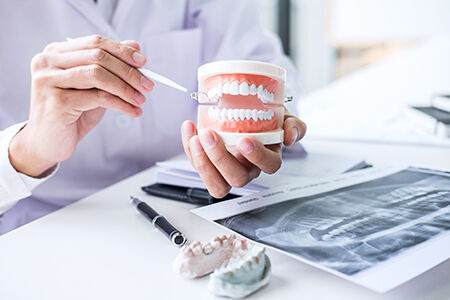
What to Expect When Getting Dentures
Creating a denture involves taking detailed records of your mouth so the appliance fits properly and matches your appearance and bite.
Depending on the type of denture, the process may include impressions, selecting the size and shade of the replacement teeth, and trying the restoration at different stages to evaluate fit and appearance.
Once your denture is placed, you may need adjustments as you become accustomed to wearing it. This is particularly common with a new full denture or while tissues are healing after tooth extractions.
Dentures vs. Dental Bridges
Both dentures and dental bridges can replace missing teeth, but they differ in how they are supported and used.
A dental bridge is fixed in place and typically replaces one or several missing teeth using neighboring teeth or other support. Dentures are removable and can replace several teeth or an entire arch.
The right option depends on the number and location of missing teeth, the condition of the remaining teeth, and your individual oral health needs.
Adjusting to and Caring for Your Dentures
It is normal for new dentures to take some time to get used to. You may initially notice changes in speaking, chewing, or saliva production while your mouth adapts.
Starting with softer foods and gradually returning to your usual diet can make the adjustment period easier. If a denture creates persistent sore spots or feels unstable, contact Greenwich Smiles so we can evaluate and adjust the fit.
Clean dentures regularly to remove food debris, plaque, and stains. Any remaining natural teeth and your gums still require daily care.
Over time, changes in the gums and supporting tissues can affect how a denture fits. Regular dental visits allow your dentist to monitor the appliance, your remaining teeth, and your oral health.

Frequently Asked Questions About Dentures
Will dentures look natural?
Modern dentures are designed with appearance in mind. The shape, size, and shade of the replacement teeth can be customized to complement your smile and facial features.
How long does it take to adjust to new dentures?
Adjustment varies from patient to patient. Speaking and chewing may feel different at first, and some patients require minor adjustments before their dentures feel fully comfortable.
Can I eat normally with dentures?
Most patients can return to a varied diet once they become comfortable with their dentures. It is often helpful to begin with softer foods and gradually introduce firmer foods as you adjust.
Do I still need dental checkups if I have full dentures?
Yes. Regular dental visits remain important even if you no longer have natural teeth. Your dentist can check the fit and condition of your dentures as well as the health of your gums and other oral tissues.
What is an immediate denture?
An immediate denture is designed to be placed after teeth are removed so you do not have to go without teeth while the extraction sites heal. Because the gums and supporting tissues change during healing, you may need adjustments or a reline afterward.
What should I do if my denture breaks or no longer fits properly?
Do not attempt to repair or reshape the denture yourself. Contact Greenwich Smiles so we can evaluate the appliance and repair, adjust, or replace it as appropriate.
Does dental insurance cover dentures?
Some dental insurance plans cover partial or complete dentures, but benefits vary by plan. Our office can help you review your coverage and understand your available benefits.